Onions & Apple Trees

We are finally getting some rain!

I was beginning to lose hope we would get any moisture at all. Last night as I sat out by my fire I watched the clouds filled with rain go around me. It seemed to be raining everywhere but here. It didn’t even smell like rain, which was disheartening in itself.

This morning started out warm and sunny, so I thought for sure the forecast was out to lunch. I took the big dog for a walk across the field because we both needed to get out for a little while. It was warm and sunny while we were out, but started to cloud over shortly after we got back. I still didn’t have any faith we were going to get rain.

I was honestly surprised when the heavier clouds rolled in and the rain began. Our fields are so dry. This will help the fields, pastures, and the gardens. It’ll delay some seeding for a few days, but it will be worth it in the end.

Spring Cleanup

Yesterday afternoon I cleaned out one of the raised beds I didn’t get to before the snow fell, and was surprised to find onion bulbs as firm as they had been during the summer. I planted about 12 little multiplier bulbs last spring, and used the green onion all summer. I even pulled a few and used them.

As I was cleaning the bed, I started uprooting the bulbs…and to my surprise I ended up with 30 of them. As excited as I was, my thought then was “What am I supposed to do with them?”. I’ll be moving in a couple months, so I couldn’t very well just leave them there to grow; especially since I’m disassembling the raised bed so I can take it with me.
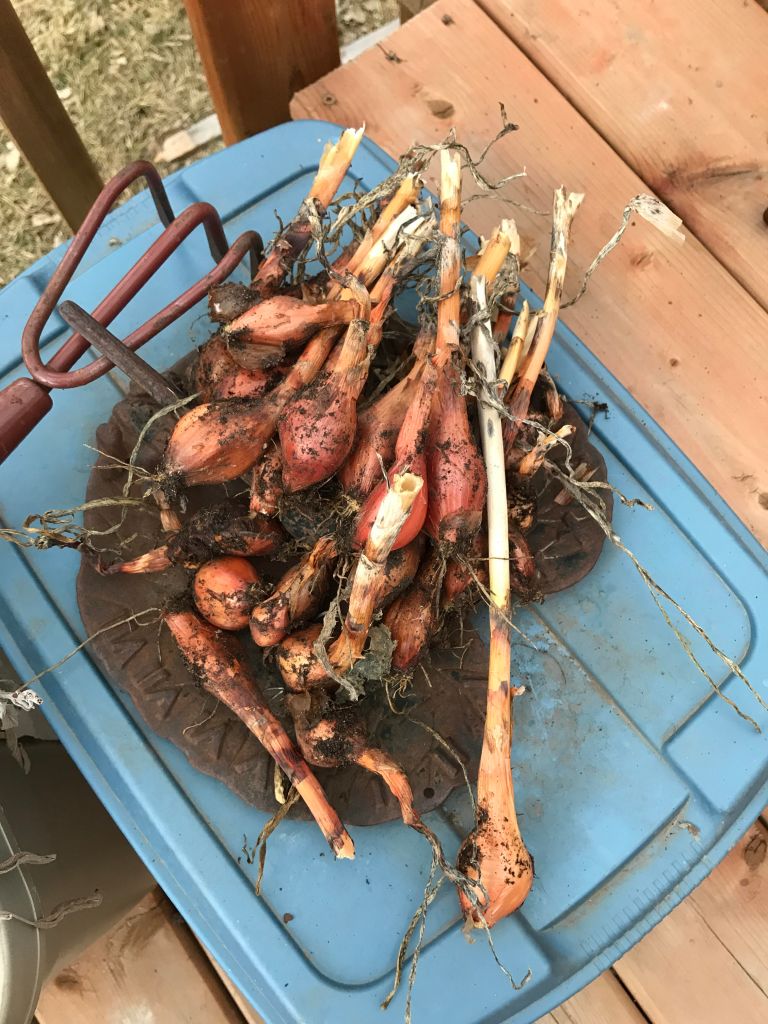
Multiplier Onions

The next thing I cleaned out was the self-watering planter I made last summer. It had been filled with herbs, and it worked wonderfully for them. All that’s left in it is the clump of chives, which I decided not to uproot. I decided the onion bulbs could go in with the chives, at least until I figure out where else to put them.

I raked up piles of woodchips and grass, with the hopes of having a bit of a bonfire in the evening. The wind picked up and that was not to be; at least not where my main fire pit is. (I did have a small one in my little screened firebox on the other side of the house though.) Now those said piles are getting a good soaking in the rain, so they won’t burn very well. They may just become mulch in my new yard instead.
Click on the image to be taken to the signup page.

Relocating Trees

I’ve had quite a bit of experience over the years with houseplants, herbs, vegetables, and even soft fruits. My challenge this year, however, is going to be relocating my apple trees. I have to admit, I’m a little worried.

My kids bought them for me two years ago for my birthday, and I planted them: one on the north side of my house, and one on the south. At that point in time I hadn’t even considered moving; I was too distraught with Ross’s passing.

Now here I am, two years later; and trying to figure out the best way to move them so I don’t lose them. Like I said, my experience with moving trees is minimal. I do suppose this will be a learning experience for me.

From what I can tell from my research, the best time to dig them up is before they bud out. I was going to do that this afternoon, but the rain came before I could start. And to be honest, I really have no desire to dig up trees in the pouring rain.

Since my move won’t be until early July, my best option will be to put them in a container. Since the trunks are just a little bigger than an inch, the root ball will have to be no smaller than 18″. My research also tells me if they are in a container, they can be transplanted at any time. (Bare root trees would have to be done when the roots are dormant.)

Something else I learned is the trees should be marked so they face the same direction when planted in their new spot. In all honesty, it’s not something I would have even considered if I had just been “winging it”. It pays to do your research; whether you’re writing an essay or moving trees.

Giving the trees a good soaking before digging them up is essential, so I think Mother Nature has to be thanked for that. Keeping the container watered to avoid stress to the roots is also beneficial. Giving them plenty of room to spread out even while in the container will help lessen the shock when they’re put in the ground again. At least that’s my thought; and hope.

Once they’re placed in the new spot, they’ll have to be staked and watered regularly. Right now both trees are around the 8′ tall mark (give or take) so should be relatively easy to transport in an enclosed trailer. I really don’t want to risk them getting damaged by the wind in the back of the truck, especially since over half of the trip will be at highway speed.

All I can hope for is my trees survive the move. Have you moved trees before?
Click on the image to be taken to the signup page.

When is it okay to start bedding plants?

Have you noticed we have more daylight now than even a couple weeks ago?

I do have to say, it’s nice to be able to walk at 5 p.m. and have it still be light out. And where I live, I don’t walk after dark if I can help it. I never know where the moose, deer, and other wildlife is hiding.

With the longer daylight hours comes the desire to get the outdoor plants started, but don’t get too excited just yet. The dates ultimately depend on your temperate zone, which I’ll discuss shortly. I have made the mistake more than once, and my seedlings didn’t do well.

Disclaimer: Links within this post are either to my own products, or products I endorse. I may receive a small commission should you make a purchase through an affiliate link, at no extra cost to you. My blog is supported through commissions and sales of my products. Plus, if you like what you read you can show your support by pinning this post, sharing on social media, or buy me a coffee.  Thank you for your continued support.

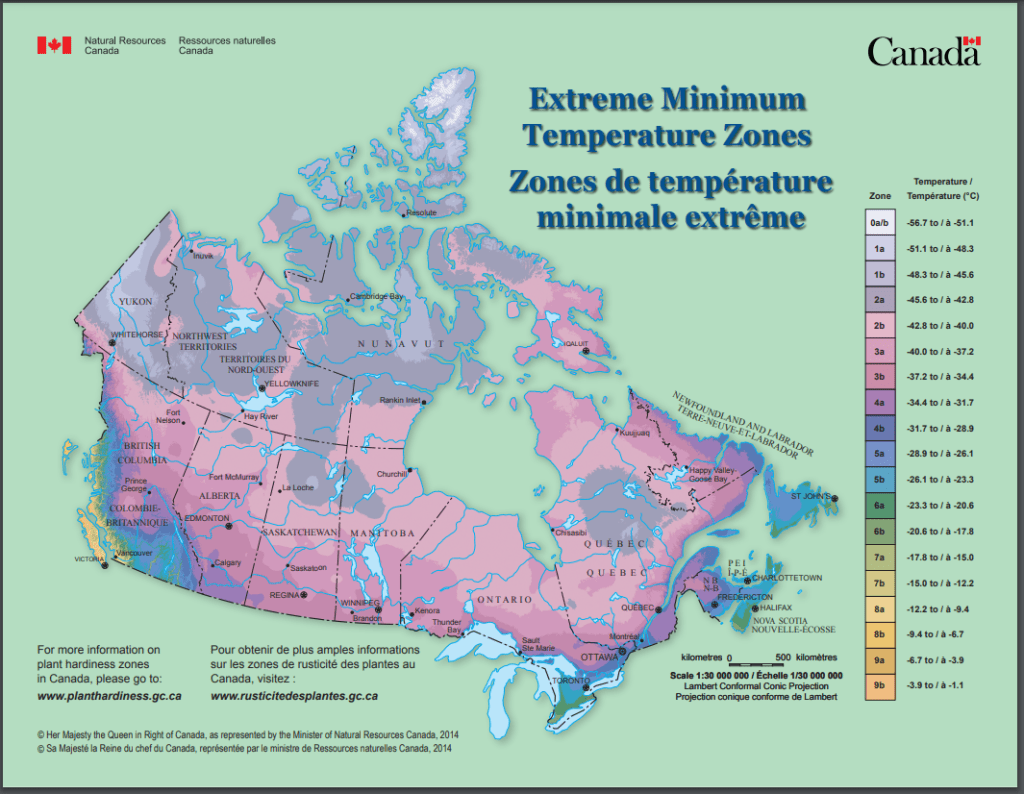
What’s a temperate zone?

In a nutshell, the temperate zone is what the minimum temperatures can get to in any given area. Here in Canada we range from an area with the coldest temperature at -1.1 degree Celsius (9b) to -56.7 (0b). Now that is cold!

My area ranges from 3a to 2a, depending on the year. Oveall the average is 2b, which is from -40C to -42.8C. That’s just temperature alone; the windchill is not factored into these numbers.

When living in zones like this, it definitely cuts down on what a person can grow through the summer. Perennials have to tolerate frigid temperatures and annuals have to grow fairly quickly due to a relatively short growing season. It would be wonderful if we could all have heated greenhouses so we could enjoy more of a variety, including citrus trees.

When we were in Vancouver a few years ago I was surprised to see banana trees planted outside. I was told they could survive brief periods of below zero temperatures, but I personally wouldn’t be that brave. But then again, I don’t live there so can’t say for sure.

Frost dates.

When you’re planning your garden you need to know the average first and last frost dates. It does range in comparison to what your temperate zone is, but in my part of Alberta we generally don’t plant anything outside until after May Long Weekend (Victoria Day). And depending on the year, we’re sometimes covering our tomatoes and other plants by the end of August.

When you’re deciding on your seed planting dates, there’s a simple formula to follow. On a normal year it should work out okay, but we all know Mother Nature has the final say.

Copied from the Government of Canada site. Click the image to be taken to the source.
When can I plant?

The rule of thumb is to start plants 6 to 8 weeks before you plan to put them outside. Since May Long is the earliest we can safely put plants out, I generally do not expect to start anything until the beginning of April. That gives me a little more than 6 weeks.

As some seeds take longer to germinate, it’s good practice to pay attention to the information on your seed packets. Also pay attention to the days to maturity, as each plant type is different. Some you won’t have to start inside, such as peas, beans, beets, carrots, as they don’t transplant well and grow quickly. Well, except for carrots; but they are below the surface so a light frost won’t hurt them anyway.

Other plants such as flowers, tomatoes, peppers, many herbs, broccoli, cauliflower, for example, do better when started indoors. They take longer to reach maturity, so depending on your zone, will benefit from being started indoors.

What about light?

All plants need light once they start to grow and giving your plants full sun is best. If you don’t have a south-facing window that gets direct sunlight, the next best thing is a grow light. They need at least the equivalent of 6 hours of full sun a day. I have to admit, my plants usually end up being leggy because they don’t get the proper light as I have limited south-facing window space.

This year I am going to put my seedlings under grow lights. In fact, I cleaned off the top shelf in a bookshelf for some plants. I invested in some small grow light bars and have them in place. So far my shorter house plants are under them, but as the daylight hours are longer I’ll be moving them closer to the window. (My office will soon be entirely over-run with plants.)

In addition to growing time and proper light you’ll need to make sure you monitor watering as well. A spray bottle is ideal for seeds and seedlings, or watering from the bottom to prevent them from being damaged or washed away. A mini greenhouse is ideal for starting most seedlings, but take care to allow for ventilation and be sure it doesn’t get too hot inside.

In conclusion.

Planning your garden is exciting, whether it’s your first or 50th. Starting your own seedlings can bring a little bit of summer into your home early, and you’ll enjoy the fruits of your labour sooner as well.

Click on the image to be taken to the signup page.

Peace Amid the Chaos

To start, I hope everyone is doing well. We are dealing with an unusual situation; one most of us have never had to experience before.

It has taken me a bit to wrap my head around the whole thing and I have decided to take advantage of the down time. Well, the little down time I will actually have that is.

My part-time job as a library assistant is still there, although we are no longer allowed to have our doors open to the public. We will still be proceeding with cleaning of shelves, weeding of books, getting craft kits ready, and doing inventory. Yes, I think we will be busy for awhile yet.

As spring is finally here (well, the calendar says it is) it’s time to start thinking about the garden. Keeping a supply of fresh fruit and veggies on hand will be easier when we are able to grow our own. I’m impatiently waiting for the snow to melt so I can start building my greenhouse, build some raised beds, and mark out the areas for the fire pit, arbors, and flower gardens.

There’s just something about working out in the garden. No matter what is going on in the world around us, the garden offers peace and tranquility. I am fortunate to live in an area with few people around. I consider us blessed to have the peace and quiet so many others only dream of.

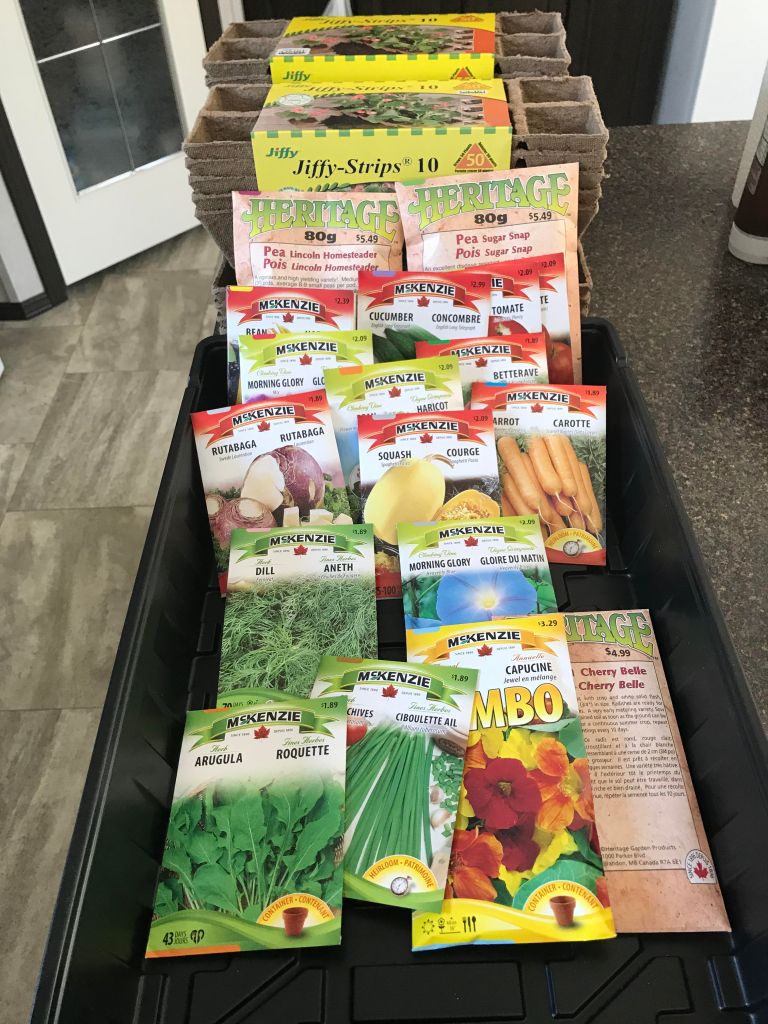
Whether you live in the country or the city, now is the time to start getting your garden ready. If it is still covered in snow, there are still things you can do. One of them is to go to your local grocery or hardware store and buy your seeds, some potting soil and containers to plant your seeds in. I did a one-stop shop at our local hardware store yesterday and spent almost $100.00 on seeds, soil, mini greenhouses, and peat packs.

Image Copyright Diane Ziomek 2020

I know it may seem like a lot, but when I don’t have to go into town for fresh fruit and vegetables, I will have recouped the cost in food and fuel. And saving money is why many people start a garden in the first place.

This has been an unusual year to say the least. More people are working from home, simply because they don’t have a choice. I think that’s not a bad thing for most, as there are more opportunities to take small breaks to stretch, get some water, and have a healthy snack.

Whether you live out in the country or in an apartment, you can still take advantage of the benefits of gardening. Fresh produce, being more active, and just enjoying the process of growing your own food amid the chaos of our current situation.

It is even more important at this time to stay healthy. Get plenty of rest, utilize the technology available to stay in touch with family and friends (physical distancing), drink plenty of water, keep active, and eat as much homegrown fruit and vegetables as possible. Plus, don’t forget to take the mental break needed as well. We should all come out of this with better habits and healthier bodies if we make the changes necessary at this point.

As I get ready for gardening season, I will be counting my blessings. No matter what’s going on in the world I have my garden to offer peace and tranquility. I’ll be posting pictures as the weeks go on of my progress in my gardening journey, and I would love for you to do the same. I now have a Facebook Page where you are free to post pictures of your seedlings, plants, gardens, and even your houseplants. With physical distancing in force it’s even more important to remain in contact with others via texting, video messaging or the telephone.

Lets all do our part in stopping the spread of COVID-19 and find peace amid the chaos.

What are you doing to stay healthy and safe?